Agnete Iversen
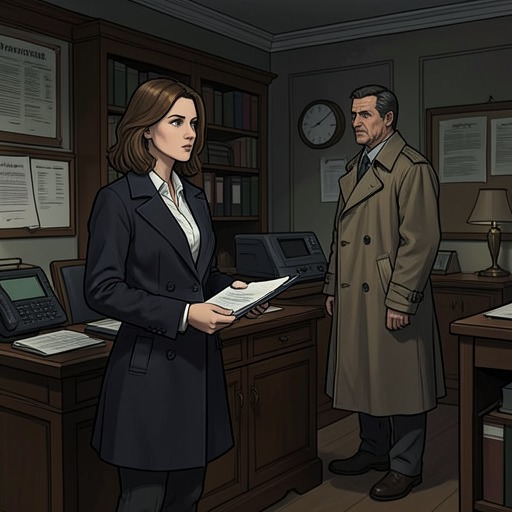
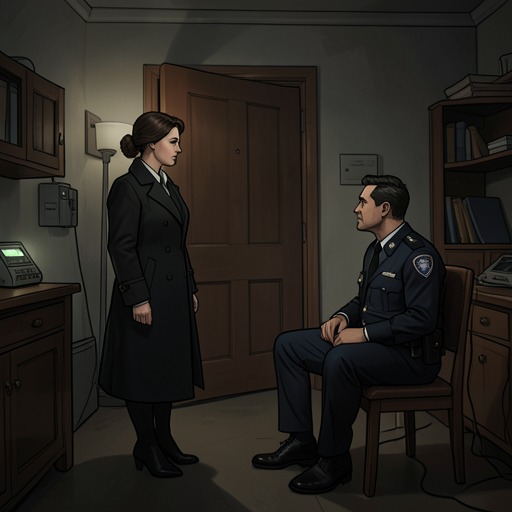
The SonAgnete Iversen is the forty-nine-year-old matriarch of a wealthy Oslo family, presented first through the polished routines of her household and later as a murder victim whose respectable image obscures a darker role. Her shooting in the family home turns a private domestic setting into a crime scene; Simon Kefas’s later accusations place her at the center of a scheme to eliminate a problem connected to a pregnant Vietnamese woman.
Identity and Household
Agnete’s appearance complicates other people’s sense of her age. Her smooth skin, bright eyes, and slim figure suggest a woman in her mid-thirties, while her greying hair, classic clothes, and educated, slightly dated speech lead people to assume she is older. The family’s life high on Holmenkollåsen reinforces that impression: the Iversens seem to belong to an earlier generation, with Agnete as a stay-at-home wife and two domestic employees attending to the house, garden, and family’s needs.
Her daily routine gives this traditional position a visible form. Although the household is imposing, its domestic work is manageable enough that the staff do not begin until noon. Agnete rises first, walks in the forest bordering the property, picks ox-eye daisies, and prepares breakfast for her husband, Iver Iversen, and their son, Iver Iversen Junior. She watches them eat the healthy meal she has made, then clears the table and dries her hands on a white apron. At the front steps, she kisses them goodbye as they leave in the family’s well-maintained Mercedes.
The rituals express continuity as much as personal habit. Iver Iversen Junior thanks his mother with a handshake, a custom maintained for several generations. He spends school holidays at the family property company, where his father hopes he will learn the discipline of work and the obligations that accompany inherited wealth. Agnete’s place in this order is domestic, but Simon later argues that the company itself is built on her money, making her influence more consequential than the household routine initially suggests.
The Shooting at Home
An armed boy arrives at the Iversen home after Iver Iversen and Iver Iversen Junior have already left. When he asks whether this is where the family lives, Agnete confirms it and points toward the road, explaining that he has missed the two men. The boy takes an object from a sports bag and aims it at her. Agnete has never encountered anything like this in real life, but she recognizes what she is seeing: a handgun.
She retreats toward the open doorway, unable to catch the boy’s eye behind the weapon. A shot sends her stumbling backward through the hallway and into the kitchen. She remains on her feet briefly, reaching out for balance and striking a picture on the wall, before falling through the kitchen doorway. The vase and flowers she has brought in from her morning walk are scattered on the floor beside her white apron. From there she sees the boy turn toward the maples beside the flagstone path, bend down, and disappear from view. She hopes he has gone. Unable to get up, Agnete closes her eyes as the pain takes hold.
The contrast with the morning’s routine is stark but precise: the flowers gathered during her walk and the apron worn while serving breakfast remain in the scene after the household’s order has been violently interrupted. Her husband and son are absent when the boy comes; the evidence does not establish why he sought her or who sent him.
The Crime Scene and Investigation
Simon deliberately waits before examining Agnete’s body, wanting to give it his full attention rather than form an impression too soon. When he finally looks, he sees a nearly symmetrical circle of blood on the white apron. The sight briefly recalls Japan’s national flag, but the comparison also marks the loss at the center of the image: the woman is dead, and Simon has come to associate such an expression with a person reduced, in death, to an object.
The evidence he observes is limited. Agnete has been shot in the chest, apparently once. Her hands show no signs of a struggle, and none of her nails are broken; the polish on the middle finger of her left hand is chipped, though it may have been damaged when she fell. Simon asks whether there are signs of a break-in and directs the medical examiner to turn the body over. These details frame the shooting as a matter for investigation rather than resolving the circumstances of the attack.
For a time, the investigation does not establish a connection between Agnete’s murder and a separate triple homicide. Kari Adel tells Simon that she has searched for every possible and impossible link between the cases and cannot find one. Simon cautions that a failure to find a connection does not prove none exists. The uncertainty matters: the Iversen case first appears separable from the other killings, even as the investigation continues to test that assumption.
Family Wealth and Alleged Motive
The later questioning of Iver Iversen brings Agnete’s family position into sharper focus. When Simon raises the pregnancy of the murdered Vietnamese woman, Iver denies knowing about it, then qualifies his response by saying he knew something but knows nothing about the matter. He asks to call his lawyer and insists that Simon has no proof. Simon replies that he believes Iver does not know everything, but that Agnete did.
Simon’s proposed explanation centers on the family’s power and public standing. He describes the Iversens as Oslo’s largest private property owner, a family with a spotless public image, and argues that its property company is built on Agnete’s money. In his account, she therefore had both knowledge and authority: she decided to get rid of the problem, and others acted on her decision. Simon further alleges that those involved needed a scapegoat after a witness reported seeing someone inject the woman in a backyard; he accuses Iver of leaving Agnete to contact the people who could carry out the work and of paying to have the tracks covered.
These claims recast the woman who prepares breakfast and tends flowers as a powerful participant behind the family’s respectable surface. They remain Simon’s accusations in the available evidence, not a confession by Agnete or an independently narrated account of her decision. Her death prevents her from answering them, while Iver denies knowledge and demands legal counsel.
Narrative Role and Significance
Agnete’s characterization is built around a collision between appearances and concealed power. The old-fashioned household, the generations-old handshake, the flowers, and the white apron make her domestic role tangible; Simon’s later account assigns her a decisive place in the property fortune and in the alleged response to the pregnant woman. The novel does not need to erase either image: the routine can be genuine while also concealing authority exercised beyond the home.
Her murder also interrupts the apparent security of the Iversen estate. The family’s men leave for the day in their Mercedes, while Agnete remains at home and answers the boy at the door. The same threshold that marks the boundary of a privileged household becomes the point of entry for violence. In the investigation, her body is first a carefully examined scene, then the absent center of Simon’s theory about money, reputation, and responsibility. Her narrative significance lies in that reversal: the woman introduced through the work of maintaining the family’s image is later identified by Simon as the person who may have acted to preserve it.